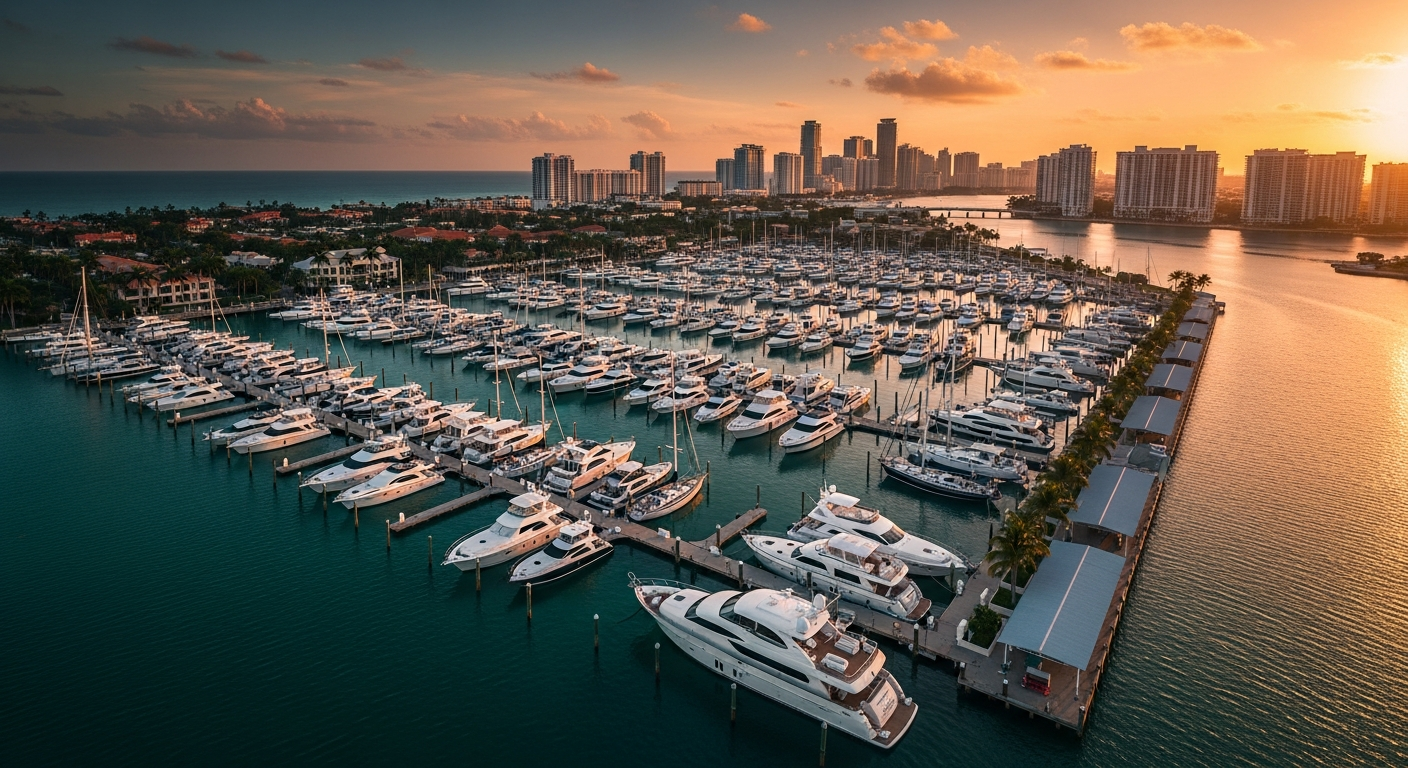
South Florida is the recreational marine capital of the world. That is not a marketing slogan. It is a documented economic reality. The region supports $18.5 billion in annual economic impact, more than 142,000 jobs, and over $7 billion in wages and earnings. Broward County alone has more than 100 marinas, 28 boatyards, and 11,218 boat slips. Florida leads the nation in registered boats, with 1,030,053 on the water as of 2024, with 45,187 right here in Broward.
This is not a niche industry. It is the connective tissue of our coastal economy.
And right now, it is being quietly bought up.
When the Money Moves In
In February 2025, Blackstone Infrastructure announced the acquisition of Safe Harbor Marinas, the largest marina network in the United States with 138 locations, from Sun Communities for $5.65 billion in an all-cash deal. The transaction closed in April. Simultaneously, Suntex Marina Investors, backed by Centerbridge Partners, has been executing its own national roll-up, now exceeding 90 locations and still growing.
The institutional thesis is straightforward: fragmented ownership, post-pandemic demand surge, scarce coastal supply, recession-resistant cash flows, inflation-hedging real estate. It is a compelling pitch.
It is also one we have heard before, nearly word for word, about South Florida's golf courses.
The Playbook We Already Know
In the 2000s, institutional investors and foreign operators moved aggressively into South Florida's golf market. The asset class looked ideal: lifestyle real estate, land-backed, with premium pricing power in a growing metro.
What followed is well-documented.
Heron Bay Golf Club in Parkland was acquired by Canadian operator ClubLink in 2010 for $4.75 million. It closed around 2019. In 2021, it sold for $32 million, a roughly 7x return, to be converted into stormwater infrastructure and residential parcels. Lawsuits followed. Community character was lost. The land, however, was monetized.
Inverrary Country Club in Lauderhill, which once hosted PGA Tour events, shuttered during COVID and is now slated for hundreds of homes. Across Broward and Palm Beach, course after course followed the same arc: distressed acquisition, minimal operation, land-value exit.
The golf course was never the investment. The land under it was.
Why Marinas Are Different, And Why That Might Not Be Enough
To be fair, marinas have structural advantages golf courses never had. You cannot permit a new marina on South Florida's coastline given the regulatory and environmental barriers. Demand for slips consistently outpaces supply. The economics are more durable.
But here is the concern Founding Blue is watching closely: when institutional capital enters a leisure asset class with a land-value backstop, the community function of that asset becomes secondary.
The 11,218 boat slips in Broward County are not just storage. They are the physical infrastructure that makes the $18.5 billion regional economy a real number rather than an abstraction. Three days of fueling at a single marina moves 153,000 gallons of diesel and nearly $400,000 in fuel revenue. The 91 vessels longer than 70 feet that transited Port Everglades in just ten days in January 2025 represent thousands of crew jobs, vendor relationships, and local supplier contracts. This is an ecosystem, not a line item.
The Contractor Problem Nobody Is Talking About
Beyond slip fees and facility ownership, there is a quieter threat forming: vertical integration of marine services.
For decades, the marinas of South Florida have supported a rich ecosystem of independent contractors, specialized subcontractors, and trade professionals. The marine electrician who has worked the docks for 20 years. The fiberglass shop that does repair work no one else will touch. The dive team that cleans hulls up and down the waterway. These are small businesses that built their livelihoods in the cracks and alongside the slips of independently owned facilities.
When institutional operators consolidate ownership and then begin building or acquiring preferred vendor networks, those independent contractors get squeezed out. Approved vendor lists. Exclusive service agreements. Platform-managed bookings that route work to in-house teams. It is efficient for the operator and catastrophic for the independent trades that have always formed the backbone of this industry.
The golf parallel holds here too. When large management companies took over courses, the local teaching pros, equipment shops, and independent caddies lost their footing. The platform absorbed the revenue. The community absorbed the loss.
What Happens When Ownership Consolidates
When ownership is concentrated into a handful of institutional platforms optimizing for yield, several things tend to happen:
Pricing gets extracted. Operators with dominant market position exercise it. Middle-market boaters, the working captains, the charter operators, the families with a center console, feel it first.
Local accountability thins. The difference between a family-run yard that has been on the New River for 40 years and a portfolio asset managed from a Manhattan office is not sentimental. It is material. One makes decisions anchored in community relationships. The other makes decisions anchored in quarterly returns.
Independent trades get locked out. Vertical integration of services is already beginning. When a corporate operator controls both the slip and the approved vendor list, the independent contractor has nowhere left to stand.
Redevelopment risk grows over time. South Florida's waterfront is among the most valuable real estate in the country. If boating demand softens, or if Florida's land-use laws continue to evolve in ways that lower the cost of waterfront conversion, as they did for golf courses, the backstop calculus for marina investors changes. It already changed once for ClubLink. It can change again.
What Founding Blue Is Watching
Founding Blue exists to connect and accelerate South Florida's blue economy, the innovators, operators, and institutions building around our coastal identity. That mission requires that the infrastructure of the blue economy remain accessible, functional, and community-rooted.
We are not opposed to investment in marinas. Upgraded facilities, better technology, more capacity for the superyacht corridor that makes South Florida the refit and repair capital of the world, these are good outcomes. We want institutional capital to be a steward of this industry.
What we are watching for, and what we believe the industry, policymakers, and community leaders should track, are the early warning signs that the golf course playbook is being reprised on the water:
- Rapid slip fee increases that price out working operators
- Deferred maintenance masking an exit strategy
- Zoning challenges that would permit waterfront redevelopment
- Consolidation that eliminates meaningful competition in key markets
- Exclusive vendor agreements that lock out independent marine contractors
South Florida's marine economy is the number one recreational marine economy in the nation. It took generations to build. It can be unwound faster than anyone expects.
We have seen this movie before. We know how it ends.
Founding Blue is a catalyst community connecting South Florida's technology and marine innovators, from idea to impact. Learn more at foundingblue.com