A South African on Miami's Blue Frontier
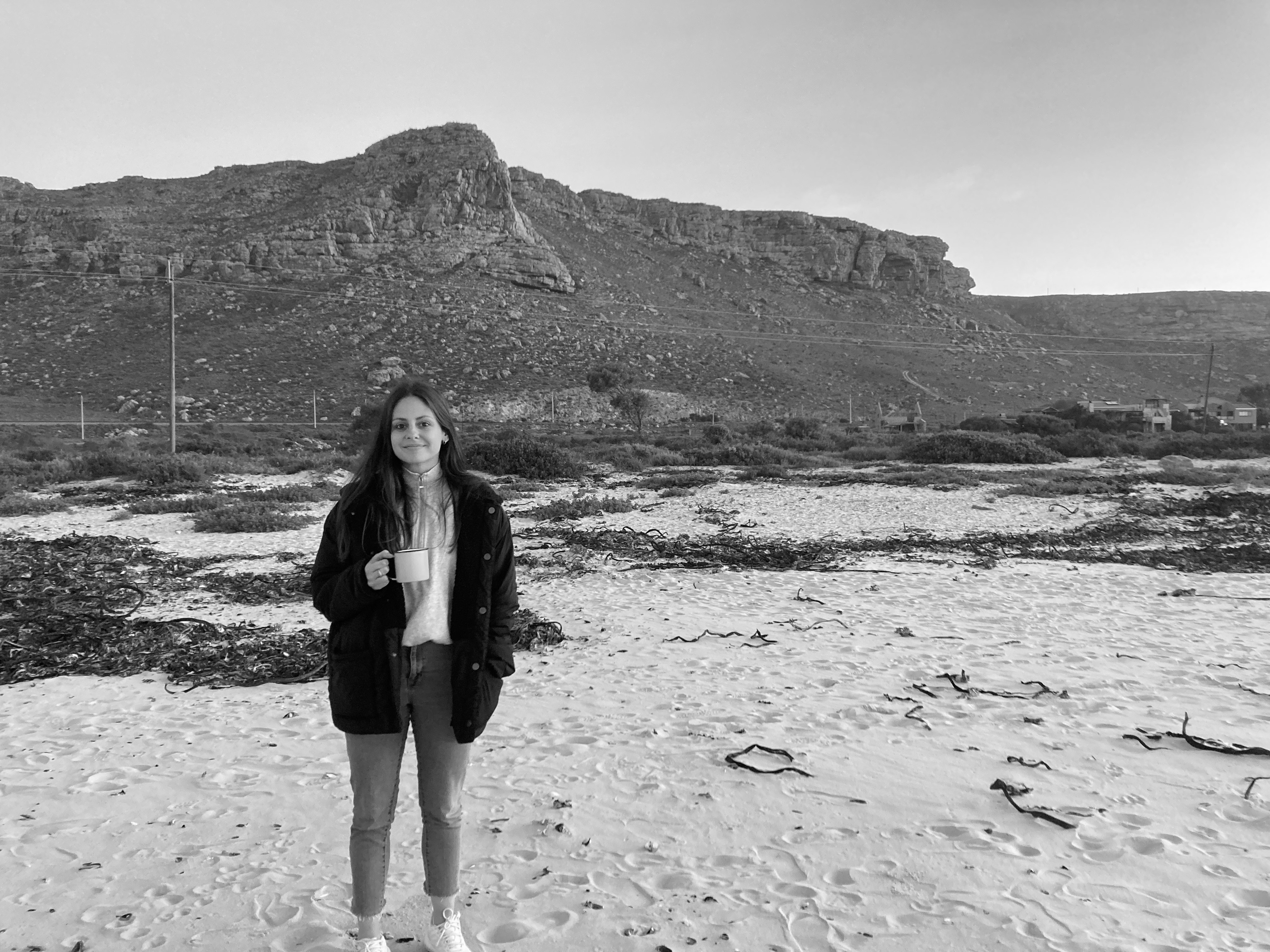
Zané van Greuning didn't arrive at the blue economy by accident. She grew up in Durban, close to Maputaland near the Mozambique border -- one of the last genuinely undisturbed stretches of coastline in southern Africa -- and vacationed there throughout her childhood. She moved to Cape Town later, when she landed her first fintech role at a startup, and discovered the cold, kelp-lined Atlantic. Those two coasts gave her a reference point for what's worth protecting. When she ended up in Miami, she built a career as a marketing consultant for tech startups, with writing for Refresh Miami as a side project covering South Florida's tech rise. It was only a matter of time before the work found its way back to the water.
She is now building Blue Tide, a weekly newsletter covering the ocean economy -- written to be accessible without being simplistic. We sat down with her to talk about the journey from fintech to ocean tech, why the blue economy isn't the nonprofit sector people think it is, and what South Florida's builders should know.
You grew up in South Africa and made your way to Miami -- what drew you here, and how has that journey shaped how you see the ocean and the blue economy?
My relationship with the ocean started young. Every year my family would vacation in Maputaland, near the Mozambique border, one of the last genuinely undisturbed stretches of coastline in southern Africa. Seeing nature that intact stays with you and becomes your reference point for what's worth protecting.
Then moving to Cape Town when I landed my first fintech role at a startup gave me a completely different lens. The Atlantic there is cold and dramatic, full of kelp forests, nothing like the warm, coral-lined Indian Ocean I grew up with. Those two coasts together made me curious about marine ecosystems in a way that eventually had to go somewhere professionally.
Miami came through my partner, who is American, but it quickly became the obvious fit beyond that. The tech ecosystem here is growing fast, the ocean is literally at the doorstep, and there's a real conversation happening about what it means to build a blue economy in a city this exposed to what happens to the sea. My main focus has been as a marketing consultant for tech startups, and on the side I also write for  covering South Florida's rise as a serious tech hub. There's a lot happening here at once, and it's a good place to be watching it all unfold.
What is Blue Tide, and what gap did you see that made you want to create it?
Blue Tide is a newsletter that started as a side project while I was transitioning into ocean tech. I was having so many interesting conversations and discovering compelling work across the sector, and I wanted a way to share that.
What I noticed was that most coverage of the blue economy either assumed a lot of prior knowledge or leaned heavily on technical language, so it was hard to follow if you were coming from the outside. There wasn't much built for a curious reader who just wanted to understand the space -- and that's the gap Blue Tide fills. It's a weekly newsletter covering three spotlights per edition, written to be accessible without being simplistic.
Coming from a content and marketing background, building that kind of entry point felt natural. The most rewarding feedback I get is from readers who say it helped them understand an industry they'd been curious about.
You come from a fintech background -- what was the turning point that pulled you toward the blue economy specifically?
I was always drawn to startups and the pace of innovation, but in fintech I struggled to connect the work to something that felt genuinely meaningful beyond the product itself. I spent a lot of time researching where I wanted to focus next, specifically looking for sectors where commercial opportunity and real-world impact were aligned. The blue economy answered that on both counts. It's a rapidly growing global sector with serious investment flowing in, and the problems being worked on -- sustainable aquaculture, ocean data infrastructure, and marine conservation technology -- are ones that have a big impact. Combined with my lifelong connection to the ocean, it felt like the obvious next step.
What I didn't anticipate was the community and culture. I've never worked in an industry where people are this willing to make introductions, share knowledge, and collaborate across organizations. I think it comes down to the fact that most people here are ultimately working towards the same outcome: a healthier ocean.
What is a story or topic you have covered that surprised you or changed how you think about the ocean economy?
The biggest misconception I encounter is that the ocean economy is primarily a nonprofit space. What I've found covering it closely is that some of the most interesting work sits right at the intersection of environmental impact and business viability -- companies building profitable, scalable models while creating measurable outcomes for ocean ecosystems. That dual-impact approach isn't just idealistic either; it's increasingly where investor attention is pointing because it's the model that can grow.
The story that really shifted something for me was a study on how much damage Florida's mangroves prevented during recent tropical storms. It connected to something I feel strongly about, which is that nature-based solutions are often the most powerful ones we have. These ecosystems have been quietly doing their job for millions of years. When you start treating them as infrastructure with real financial value attached -- rather than just scenery worth protecting on principle -- the case for investing in them becomes a lot harder to dismiss.
What does success look like for Blue Tide in two or three years -- and what would you say to someone in the South Florida tech community who has not thought much about the blue economy yet?
The goal is for Blue Tide to become the go-to source for anyone following the ocean economy -- not just a newsletter but a proper editorial destination with the depth and consistency the sector deserves. I'm actively working on expanding the content and formats to get there.
For the South Florida tech community, I'd say the timing is good and the location is a genuine advantage worth taking seriously. Florida has one of the longest coastlines in the country and a marine economy that is already substantial. The supporting infrastructure is also in place: communities like Founding Blue and Ocean Exchange, accelerators like Seaworthy Collective, connectors like Marine Research Hub, and proximity to ports and research institutions that are actively looking for innovation partners.
For builders, the problems are real and the market is growing. For investors, there's meaningful commercial upside alongside the impact story. What's still missing is more people deciding to build here.
Follow Zané on LinkedIn and subscribe to Blue Tide to stay current on the ocean economy.
Founding Blue is a catalyst community connecting South Florida's technology and marine innovators, from idea to impact. Learn more at foundingblue.com